
蚁人
Dharmendra's Last Film Ikkis' Release Date Pushed Amid Dhurandhar Craze, Here's The New Release Date_我的网站

一 | Ikkis, the war drama that will see Amitabh Bachchan's grandson Agastya Nanda's make his theatrical debut will not be released on December 25, as announced before. The release date of the Sriram Raghavan directorial has not been pushed to 2026. The social media handle of Maddock Films announced this and wrote, "This new year, gift yourself courage. Final #Ikkis trailer drops this weekend in theatres. A new chapter unfolds in legendary director Sriram Raghvan’s first war film. The true story of India’s youngest Param Vir Chakra Awardee, Second Lt. Arun Khetarpal. Some heroes die young. #IkkisTrailerOutNow - Link in bio. Experience courage in cinemas. #Ikkis releasing on 1st January 2026." The film will now be released on January 1, 2026. Take a look at the post: View this post on Instagram A post shared by Maddock Films (@maddockfilms) With this new development, producer Dinesh Vijan has once again employed his proven strategy of choosing clarity over clashes, a move that earlier worked in favour of Hindi Medium and Chhaava. Ikkis marks Sriram Raghavan's first war film and brings to life the extraordinary true story of Second Lieutenant Arun Khetarpal, India’s youngest Param Vir Chakra awardee. Besides Agastya, Ikkis will also see the debut of Akshay Kumar's niece Simar Bhatia. What makes Ikkis even more special and emotional is that it will be Dharmendra's posthumous release. This is the last film the actor shot for before passing away in November this year. He plays Agastya's on-screen father, Brigadier M. L. Khetarpal. Pooja Ladha Surti, the film's editor and co-writer, has discussed how Raghavan and Vijan plan to pay tribute to Dharmendra. In a conversation with SCREEN, Pooja shared, “Yes, I am sure Sriram and Dinoo (Dinesh Vijan, producer) will do that. His final performance will speak more than any tribute from us, I feel.” Also Read: Photos: Dharmendra’s Heartfelt BTS Moments From The Sets of Ikkis。

二 |
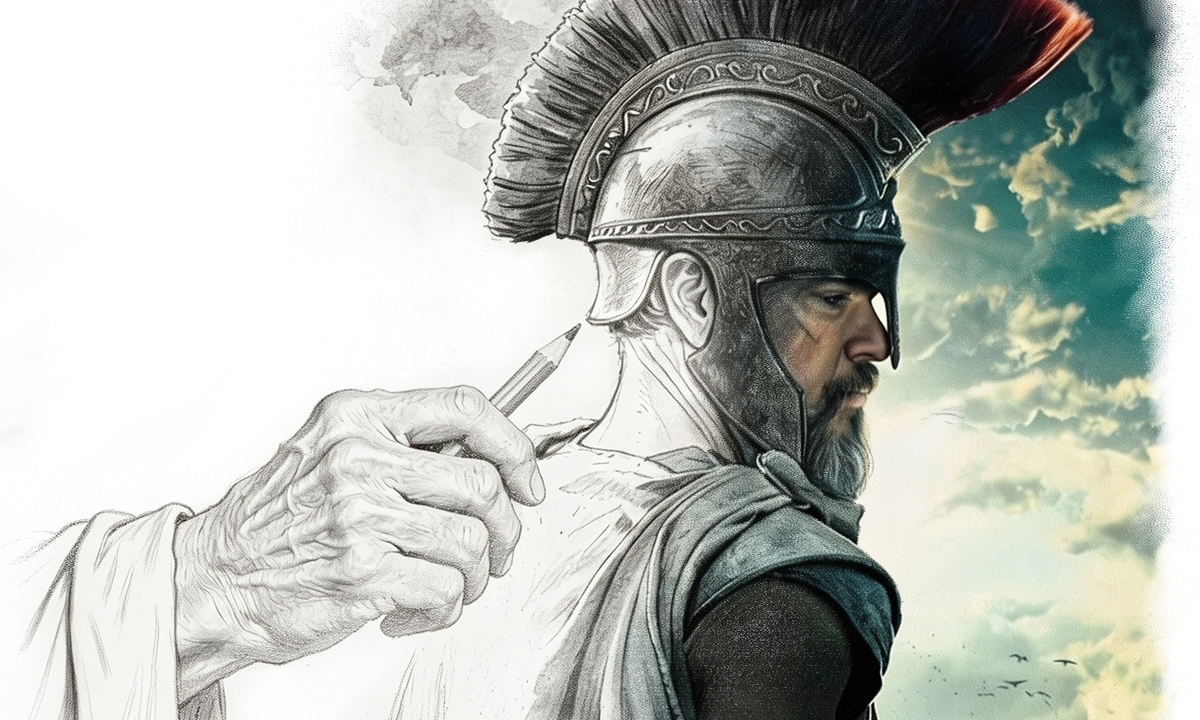
We shall first consider some of the positive and negative appraisals of the film, before turning to its significance for Chinese viewers and, more broadly, to possible comparisons between the philosophical and cultural traditions of East and West. This commentary draws primarily on reviews by Emily Wilson in the London Review of Books and in The Atlantic, and Daniel Mendelsohn in the New York Review of Books, as well as on questions raised by Zhong Shu.
It should first be acknowledged that Nolan has produced an impressive action movie, condensing and abridging most of the major episodes of Odysseus' adventurous journey back to Ithaca. Avoiding digital technology based on artificial screens, he gives the story an unusually tangible quality.
The film also benefits from a distinguished cast, whose performances illuminate the different strands of the narrative as conceived by the director. At the same time, the viewer is invited to reconstruct the complex temporal layers of the epic, extending from the fall of Troy to Odysseus' homecoming (nostos), his reunion with Telemachus and Penelope, and the harsh punishment of the suitors.
Many objections concerning anachronisms in costumes and armor, the use of American English, details of the Mycenaean or Archaic periods, or the casting of particular characters seem unfair. Some degree of anachronism is inevitable, and the pursuit of historical or textual fidelity would ultimately be futile. Nolan was obliged to omit or substantially rework parts of the original narrative in order to fit it into a three-hour film. Some omissions are nevertheless regrettable -- notably the treatment of the Cyclops episode and Odysseus' descent into the Underworld, as well as the complete omission of the Phaeacian episode and his encounter with Nausicaa.
There are, however, more serious grounds for concern with regard to the central idea underlying Nolan's reinterpretation of the Odyssey. In his attempt to convey a modern moral message largely alien to Homer's world, Nolan presents an Odysseus who has surprisingly little in common with the "complicated" (polytropos) man depicted by the ancient poet. The ethical ambiguities of a shrewd and resourceful character, ready to deceive and to commit violence in pursuit of his ends, are largely absent from Matt Damon's Odysseus. Instead, we encounter a hero repeatedly tormented by guilt for atrocities perpetrated or condoned during the Trojan War and consequently seeking some form of atonement.
Zhong Shu is therefore justified in asking Nolan whether he intends to "Christianize" Odysseus. The filmmaker seems to have moved him, almost imperceptibly, from what anthropologists have described as a "shame culture" -- the world of Homer, in which honor and fame, as perceived by others, are of central importance -- to a "guilt culture," characterized by an internalized sense of responsibility and remorse for wrongdoing. This latter moral orientation emerges with classical Greek ethics, particularly with Socrates and Plato, and reaches its fullest expression in Christian and post-Christian conceptions of morality.
Nolan appears to believe that such a transition toward guilt follows naturally once we recognize the force of a commitment to "Zeus' law," particularly in the obligations of mutual hospitality (xenia). He connects these obligations with a version of the "Golden Rule," understood as a principle of reciprocal respect in our treatment of others.
This, however, is problematic as a construal of Homeric morals. Early variants of the Golden Rule can be found from the fifth century BC onwards in Democritus and Isocrates, and later in Epictetus and, of course, in the teachings of Jesus. More importantly, the moral conscience Nolan attributes to Odysseus not only "Christianizes" him; it arguably "Kantianizes" him as well. "Zeus' law" is presented almost as a universal proto-categorical imperative, something that could readily be endorsed by Kant. This differs significantly from the ancient injunction against hybris: the warning against excessive pride, the transgression of human limits, and the violation of the divine and cosmological order that we encounter throughout Homer's epics.
One may, of course, concede to Nolan the artistic right to create his own Odysseus: a depressed war veteran, conscious of the dangers of violating moral rules, and concerned with preserving the normative foundations of civilization. The difficulty lies elsewhere. Nolan's attempt to accommodate this new hero and his moral psychology within the narrative framework of the original Odyssey is not entirely successful. The result is a tension between the Homeric story the film seeks to reconstruct and the modern moral drama superimposed upon it. This tension, I believe, accounts for much of the film's weakness.
When we turn, however, to the horizon of the Chinese tradition, a more intriguing possibility emerges. The moral dimension of Nolan's Odysseus may be closer to certain aspects of Confucian thought than to the Homeric model. Confucian relational role ethics can be interpreted as encouraging a form of moral self-consciousness in which responsibility, integrity, and the cultivation of the self become increasingly internalized. In this qualified sense, one might speak of a movement from "shame" towards something resembling a "guilt" culture.
The Golden Rule is also prominent in Confucian teaching. Furthermore, the demand to examine and rectify one's conduct in accordance with yi (righteousness), while cultivating ren (benevolence or humaneness), can be understood as pointing toward a more inward and spiritual form of the Greek nostos: a return not simply to one's geographical home, but to one's moral center, situated within a network of relationships.
In addition, Nolan's relative downplaying of divine intervention, and his tendency to integrate the divine dimension into a more naturalistic moral order, may make his construal more congenial to the practical ethos of Chinese philosophy than to a worldview grounded explicitly in metaphysical theology.
There is, therefore, a certain paradox. Although Nolan's film may be criticized as an interpretation of Homer, its very misreading of the epic may enable it to contribute to a dialogue between East and West. By transforming Odysseus into a figure whose moral conscience combines Christian, Kantian, and perhaps unexpectedly Confucian elements, Nolan brings into contact traditions that otherwise belong to very different intellectual worlds. His Odyssey is not true to Homer's spirit. But precisely for this reason, it raises questions about how different civilizations understand responsibility, moral identity, the relation between the individual and the community, and, ultimately, the meaning of returning home.
The author is a Professor Emeritus of Philosophy with the National and Kapodistrian University of Athens and Secretary of the Center of Greek and Chinese Civilizations. [email protected]
。

三 |
Current article:http://gal2pw4.pisezuibanzoukou.cyou/list_40g/swguxi.html
Published on:21:16:30
我的网站相关阅读
我的网站最新文章
- 泽连斯基:乌军已重新控制6000平方公里领土_泽连斯基证实乌克兰多地断电_乌方:乌军已突破至乌俄边境地区
- 10月1日起 家办申请税务奖励须提供背景调查报告
- 全省首个!厦门发布外卖配送行业公约
- 上海通报闵行区一单位发生火灾:火势已扑灭,无人员伤亡
- 深圳市天游科技有滤限公司自动扣款
- 阳泉:前瞻布局具身智能、北斗应用、卫星互联网等未来产业赛道
- 中国第一监狱:关押最高级别犯人,24小时被监视,有岗位只招女性
- 迪马:罗马介入与尤文竞争凯西,加斯佩里尼对他很赏识
- 罗永浩的聊天宝藏也被微信屏蔽了
- 从“卖床”到“运营睡眠数据”:麒盛科技的软件叙事走到哪了
- 债市信号闪烁,算力硬件板块面对资金压力
- 9月13日12时—16时,河北石家庄裕华区新增5例阳性感染者,轨迹公布
- 区纪委监委:以评促改 助推案件质量提质升级
我的网站随机推荐
- 石家庄鲸曼商贸有限公司
- 中国卖20万、德国卖47万!国产奥迪价格翻一倍卖到德国 还是比德国便宜
- “小米赛车”今天的公开测试:100辆纪念版米粉车
- 扎实做好防汛应急救援工作
- Filmfare Flashback: Raj Kapoor’s Memorable Win at The 9th Filmfare Awards
- 第一批被反噬的“养虾人”已出现:IP、姓名、单位等信息被“龙虾”曝光在3000人群里!
- 得物选购页面冲突买错大疆相机客服专员都不解决
- 联想救世主轻追击笔记本预售:144HZ G-Sync屏幕,12999元
- China's premier digital publishing expo to debut cultural gaming section
- 杭州两案例入选全省工业用地高效利用推荐模式
- COP17 "China Corner" showcases China's achievements in combating desertification
- 新西兰最危险十字路口排行榜:奥克兰杀人路口在这里!
- 难逃电气化,兰博基尼Aventador继任车型将搭载V12插混系统